
This profile is part of our Meet the Next Cohort series, introducing the artists selected for the second round of Black Country Digital Firsts. Each participant is exploring how digital tools can expand creative practice, audience engagement, and storytelling rooted in the Black Country.
Introducing Anthony L. Hansle
Anthony L. Hansle is developing a digital collage project that explores Black identity through layered imagery, archival photography, and contemporary digital processes. Building on a foundation of traditional collage and photography, his work translates tactile methods into digital formats, creating immersive compositions that connect past and present while inviting open interpretation.
What inspired you to apply for Black Country Digital Firsts and how did you hope it would impact your creative practice?
As a visual artist, I was drawn to Black Country Digital Firsts because it offered the chance to explore how digital technologies could expand the possibilities of my work, both in terms of process and audience engagement. The programme’s emphasis on experimentation and innovation really resonated with me, particularly as I’ve been interested in how my art can evolve in a digital-first context without losing its tactile, human quality.
I’ve often worked with collage and photography, and I wanted to explore how these could translate into digital spaces or be enhanced through digital tools. I saw this opportunity as a way to break out of the limitations of traditional exhibition formats and test new ways of storytelling and interaction.
I hoped the programme would not only support the development of new pieces of work, but also shift my perspective on what a finished artwork can look like in a digital age. I was also excited about the potential to connect with other artists in the region who are also pushing boundaries, and to situate my work within a wider, forward thinking creative community rooted in the Black Country.
Can you share a little about the project you are working on and why you feel it is particularly bold or imaginative?
I’m currently working on a digital collage series titled Looking Black in Time. The project began with traditional paper collage techniques, where I physically cut, layered, and assembled imagery to explore ideas around Black identity. These tactile experiments became the foundation for the digital evolution of the work, where I now translate those same collage methods into a digital format, expanding the visual language and creative possibilities.
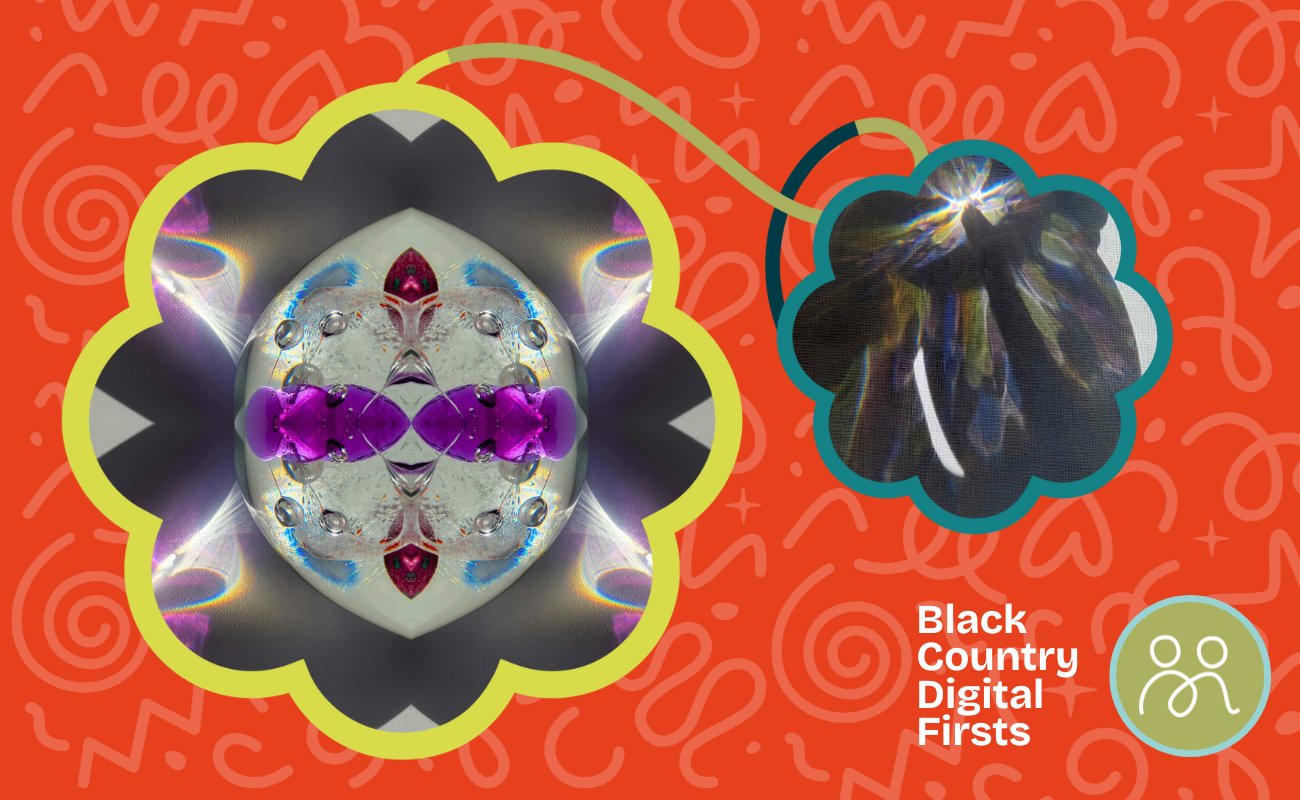
Each piece in the series blends 19th century archival photographic images with photography of vintage glass objects, creating layered, dreamlike compositions that feel almost like time portal spaces, where the past and present intersect.
What makes the project bold is its invitation for viewers to decode and interpret the symbolism within each composition. The imagery doesn’t tell a single, fixed story; instead, it encourages people to engage with it intuitively, drawing their own connections between history, spirituality, and the Black experience.
It’s also deeply imaginative, not only in its aesthetic but in the way it uses unexpected combinations, historical photographs juxtaposed with luminous, translucent digital glass photography to evoke both fragility and strength. Looking Black in Time becomes a visual dialogue between eras, mediums and emotions. An exploration of how the past continually shapes how we see ourselves today.
How do you believe fostering digital creativity can contribute to the cultural landscape of the Black Country?
Fostering digital creativity in the Black Country can help reimagine the region’s identity and amplify its voice. Historically known for its industrial innovation, the area has always been a place of making and transformation. Encouraging digital creativity builds on that legacy, but shifts it into a 21st-century context, where imagination, technology, and culture intersect.
By empowering local artists, young people, and communities with digital tools, we can open up new ways of telling stories that reflect the richness, resilience, and diversity of the Black Country. Digital platforms allow these voices to reach wider audiences, challenging stereotypes and shining light on perspectives that might otherwise remain unseen.
It also positions the Black Country as a hub for experimentation and innovation in the creative industries. By embracing digital art forms it can attract new talent, inspire collaborations, and create work that is both rooted in local identity and connected to global conversations.
In short, fostering digital creativity is not just about technology; it’s about renewing cultural pride, nurturing imagination, and shaping a future where the Black Country is seen as a leader in creative innovation.
What has been the most valuable lesson or insight you have gained from the mentoring and advice sessions provided through Black Country Digital Firsts?
One of the most valuable lessons I’ve gained from the mentoring and advice sessions is the importance of balancing experimentation with clarity of vision. As an artist working digitally, it’s easy to get lost in the endless possibilities of tools, effects, and techniques.
The mentoring has encouraged me to step back and ask: What story am I trying to tell, and how can the technology serve that story rather than overwhelm it?
Another key insight has been the value of thinking about audience and access. Digital art can sometimes feel niche or exclusive, but the sessions reminded me that it has incredible potential to be inclusive, reaching people across backgrounds and abilities, and even across borders.
This shift in perspective has made me consider not just what I create, but how others can meaningfully engage with it. Overall, the mentoring has reinforced that being bold with digital creativity isn’t only about innovation; it’s also about purpose, impact, and connection.
In what ways do you think Black Country Digital Firsts can amplify diverse voices and perspectives within the Black Country?
Black Country Digital Firsts has the power to amplify diverse voices by putting communities at the heart of digital storytelling. Through platforms like podcasts, blogs, and video series, it can spotlight underrepresented groups, various cultures, working-class residents, youth, and elders, all sharing their histories and lived experiences.
By offering digital skills training and tackling barriers like language and access to technology, more people can confidently create and share their own content. Collaborations with local artists and creatives from different backgrounds can bring powerful, cross-cultural projects to life, while inclusive curation ensures minority voices are part of the region’s digital heritage.
Youth engagement is key. Supporting young people to explore identity and place through platforms like TikTok and YouTube, with mentorship and training to build careers in digital media. Immersive technology can offer new ways to experience stories, inviting communities not just to watch but to co-create.
Celebrating multilingualism, local dialects, and everyday speech reflects the richness of the Black Country, while digital media can be used to challenge outdated stereotypes, revealing a region full of resilience, innovation, and untold stories.
How do you now envision the role of technology in enhancing your creative practice going forward?
I see technology playing an increasingly dynamic role in my digital collage practice. It expands how I can layer, remix, and reimagine imagery, turning archival photographs, digital renders, and sound into immersive visual experiences.
Beyond the studio, technology allows the work to travel far beyond local boundaries. What starts as something rooted in the Black Country can now reach global audiences, with digital platforms making the work more inclusive and accessible through sound, video, and interactive formats.
It also opens space for collaboration and dialogue. Online tools invite others into the creative process, not just as viewers but as co-creators who can shape meaning and contribute to new interpretations of the work.
Equally important is how technology helps preserve the ephemeral. Digital archiving ensures that these collages, and the stories behind them, can evolve and be revisited in the future.
In many ways, technology has shifted from being a tool to becoming a creative partner, one that pushes the boundaries of what a collage can be and how it connects to the wider world.
What advice would you give to other creatives in the region who are considering applying for funding and support?
When I think about what I’d say to other creatives in the Black Country considering applying for funding, I’d start with this: know your story. Funders will want to understand why your project matters, not just what you’re doing, but why it’s important to you, your community, and the wider creative landscape.
Start small and build up; there’s no need to pitch something huge right away. Often, smaller, focused projects are the ones that open doors to bigger opportunities later.
Do your research. Every funder has their own priorities, and tailoring your application to match them shows you’ve done your homework. Don’t be afraid to reach out and ask questions; a short conversation can make all the difference. Collaboration also goes a long way.
Funders like to see projects that connect people and create ripple effects beyond one artist. While your project might be temporary, think about its legacy and how it might continue through the skills, relationships, or ideas it sparks.
Be honest in your budgeting and make sure to value your own time and contribution. Share your application with trusted peers or mentors for feedback before submitting.
It’s amazing what fresh eyes can reveal. If you get a no, don’t take it personally. Rejection is part of the process, not the end of it.
Black Country Digital Firsts is a unique partnership between Creative Black Country and The Space that aims to build digital creative confidence, inspire excellence in the area, foster digital creativity, commission artists, and offer creative support via mentoring and advice sessions.