
Odette Campbell: Stitching Stories with Bargello
Odette Campbell is well known for her community-rooted crafting and crochet work, but a recent shift in her practice has seen her embrace a strikingly bold and rhythmic technique from the past, Bargello. Once popular in 17th- century embroidery, bargello has offered Odette a new visual language to explore themes of place, memory, architecture and belonging. It’s also marked a transformative return to solo practice, powered by the freedom of an Arts Council England Developing Your Creative Practice (DYCP) grant.
As part of her work as We Are Makers, a creative partnership with fellow crafter Ruth Turnbull, Odette’s public-facing projects often use yarn and stitch to spark conversations and build social connections. “There's something magical about creating alongside a person, especially with something as tactile as yarn,” she says.
Her love of stitch began early. “Even as a little girl, I found it super meditative,” she adds. But it wasn’t until she was living in Birmingham, surrounded by brutalist architecture, that bargello began to take root. Inspired by the sculptural forms of the old ziggurat library and other urban structures,
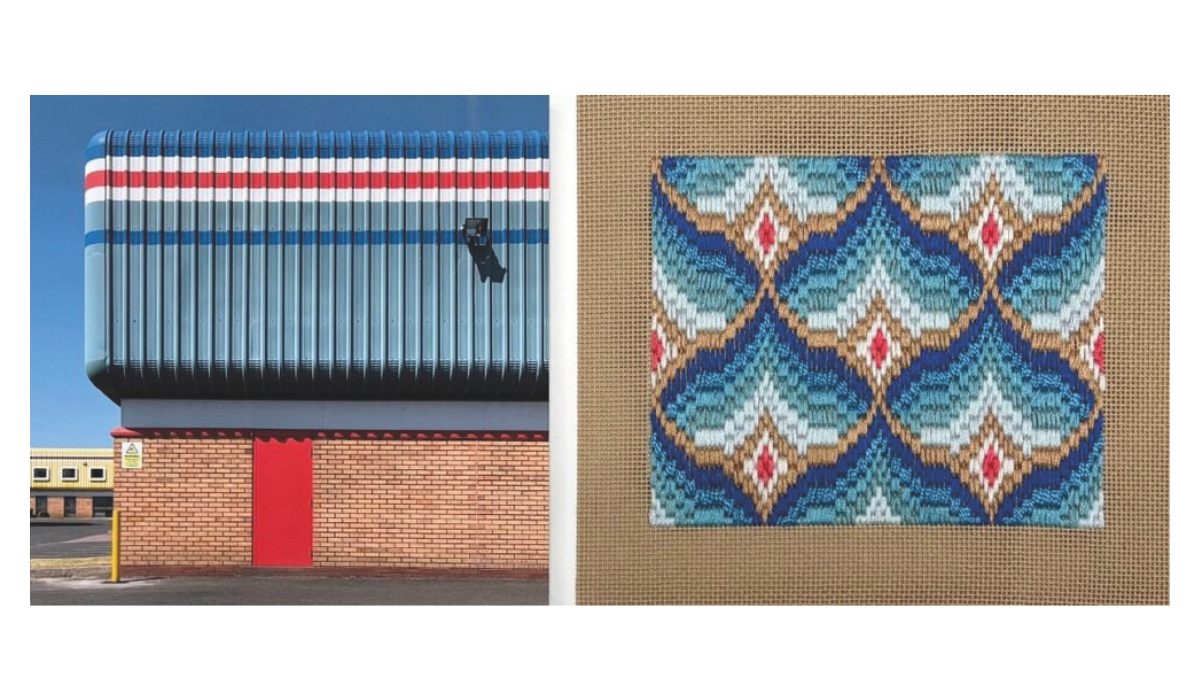
Odette began experimenting with bold patterns that echoed the rhythms of those buildings. These early bargello-style works remained quietly tucked away in a sketchbook for over a decade, until now.
After years of delivering creative projects with others, a change in family life prompted Odette to turn her attention inward. The DYCP grant provided not only financial support, but crucial validation. “When I received the notification that I had been successful, I just felt so proud, I had made 16-year-old Odette proud,” she reflects.
Odette’s story is shaped by resilience. At school, her creativity was often misunderstood. “I got into trouble for ‘trying too hard’ in Art and failing in English and Maths, so they actually took me out of art class to focus on maths and English.” It wasn’t until studying Fine Art in her 30s at Birmingham City University that she was diagnosed with dyslexia. “Suddenly school made sense,” she explains. “The grant, so much more than the money, for me was the recognition that I CAN BE AN ARTIST.”
With the time and freedom to work without outcomes or client expectations, Odette immersed herself in experimentation. “I was able to spend many hours engrossed in creating for creating’s sake,” she says. She built new networks, travelled to Budapest to visit the Hungarian National Museum, and explored bargello at all scales, playing with materials, pattern-making, and risk-taking.
Initially influenced by the architecture of the West Midlands, her inspirations took an unexpected turn following a visit to Parham House in Sussex. “I left feeling inspired to produce pieces informed by the flowers in the gardens,” she explains. “This works really well with living in the Black Country, that combination of urban and nature fits my vision.” That same blend now infuses her textiles, with floral elements sitting comfortably beside graphic forms.
She’s also increasingly drawn to public space, particularly tiles and motifs found in everyday buildings. A recent highlight was collaborating with photographer Tom Hicks of Black Country Type, whose urban photography has long influenced Odette’s sketchbook. “To see my work next to his was unbelievable, his modern urban photography next to my delicate hand-stitched work,” she says. “I like the idea of working hands, like the fact that working-class people would be in the buildings, and then my working hands are making the delicate embroidery.”
Relocating to Stourbridge from Worcestershire was another pivotal moment.“After working on several creative projects in Dudley, I fell in love with the Black Country,” she says. “The people are just so friendly, and you’re never a few metres away from a local ale and a good cob! There’s a really good mix of amazing industrial architecture and heritage and wonderful green spaces, so I’m surrounded by inspiration.”
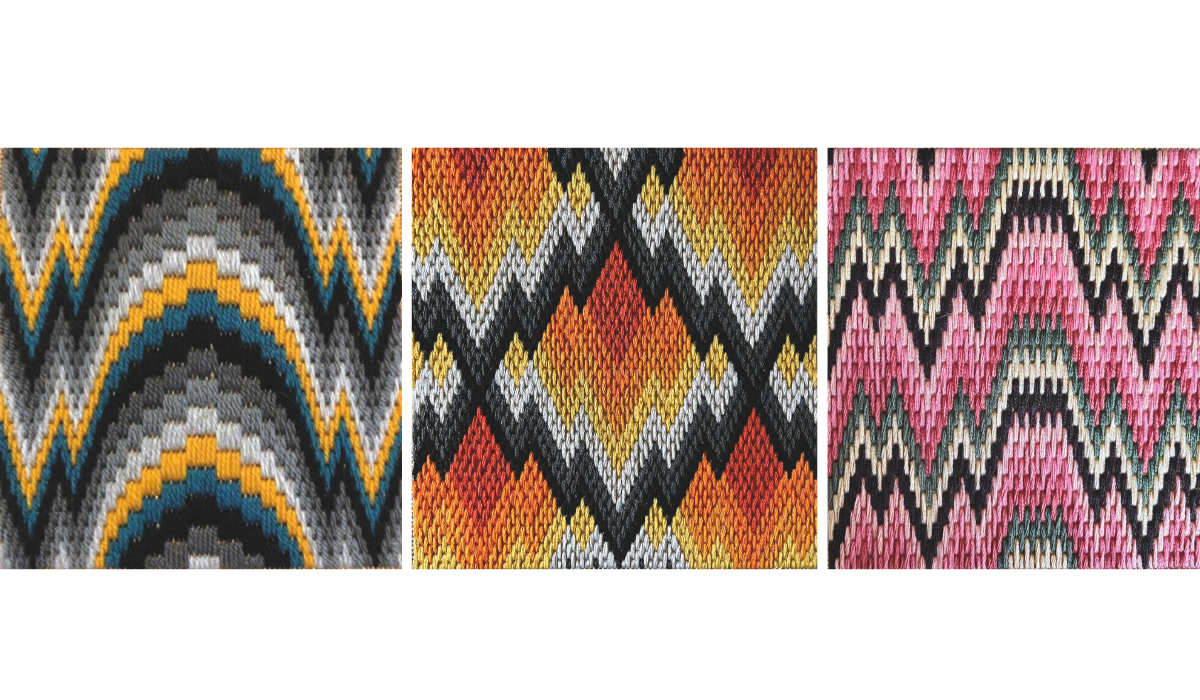
As her DYCP-funded research deepened, Odette began to feel a disconnection from some of her work. Though technically accomplished, some pieces felt too rigid and perfect. “They felt flat, too precise, almost like a computer-generated image, too much like graphic design.” Odette began to reintroduce fluidity and instinct into her process, drawing on her street art roots as Miss150. She blended spray painting, ink and stitch toproduce mixed-media works that felt more honest, intuitive and alive. “I couldn’t have produced [this work] authentically had I not spent all the time learning the technical skills first,” she reflects. Now, she’s channelled all those lessons into a new series that connects embroidery, street art, nature and urban landscape, a reflection of the Black Country itself. “It’s all a crazy mix in my head, but the world’s a crazy place.”
Odette’s recent projects have included co-creating a mural for Jasmin Road Community Gardens, and several gallery exhibitions and appearances. With a renewed sense of focus, she hints that we may see more of her work appear out on the streets. “Look out for some pieces popping up in the streets of the Black Country soon,” she adds.
From sketchbook to street, gallery to garden wall, Odette Campbell’s bargello journey is stitching together past and present, a vivid, heartfelt reflection of creative resilience, community spirit and place.
You can follow Odette on Instagram here.