
Behind the Scenes of Three 15: Why Evaluation Matters
When people hear the word evaluation, it's easy to think about surveys, spreadsheets and reports. But for Three 15, evaluation is about something much bigger. It's about understanding how creativity shapes places, strengthens communities and changes lives. Creative Black Country has appointed Dr Jenny Peevers and Dr Sara Hassan to lead the evaluation of Three 15, our place partnership programme bringing culture closer to home in Tipton, Smethwick and Wednesbury.
Over the next two years, they'll work alongside local people, artists and partners to build a picture of the difference Three 15 is making, capturing not just the numbers, but the stories behind them.
We caught up with Jenny to find out more.
Evaluation doesn't always sound exciting. Why should communities care about this work?
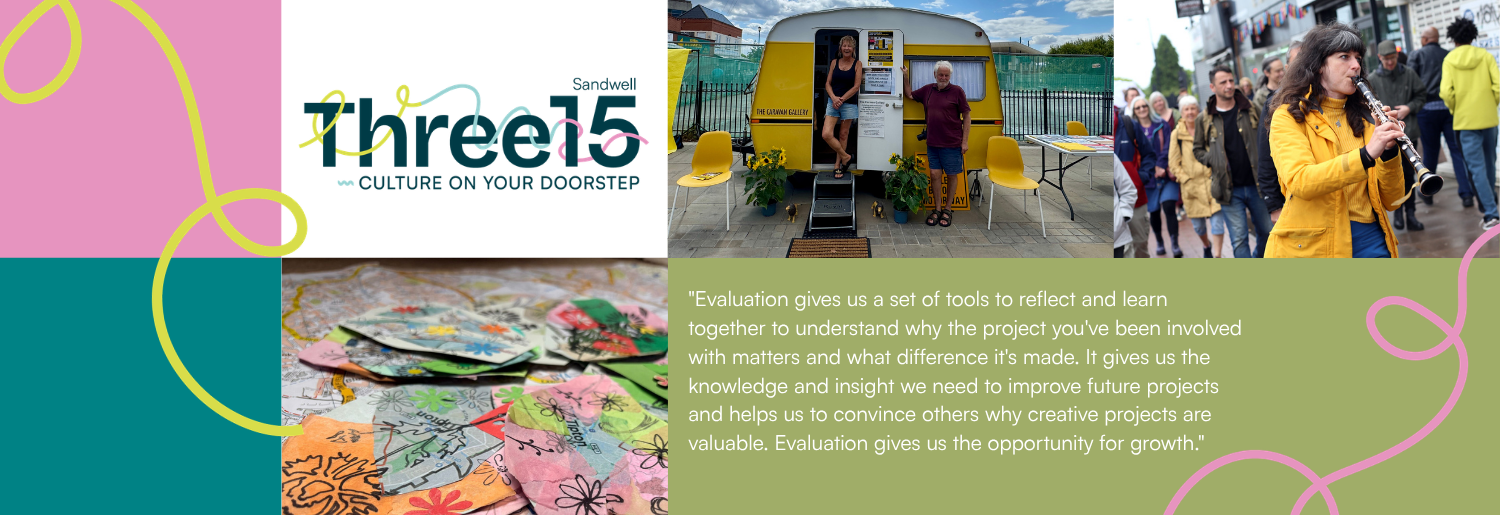
Evaluation gives us a set of tools to reflect and learn together to understand why the project you've been involved with matters and what difference it's made. It gives us the knowledge and insight we need to improve future projects and helps us to convince others why creative projects are valuable. Evaluation gives us the opportunity for growth.
One phrase that stood out in your proposal was "measure what matters". What does that mean in practice?
Measuring what matters means two things for us: Understanding what is valued, what matters, in a project from the perspective of those involved, including participants, the teams organising projects, artists, and partners. It also means gathering the information that matters to the organisations who can support future projects, such funders, policy makers and potential new partners.
Your approach puts communities at the centre of the evaluation. How will local people be involved?
Our approach is called 'participatory action research', which means we as evaluators collaborate with the communities involved to help gather the information needed to understand what happened, how the project was experienced, and reflect on what's changed and what we've learned.
Three 15 is all about culture on your doorstep. What kinds of change will you be looking for over the next two years?
As the process is participatory, we will listen to the change those involved are hoping for, and importantly, our process will capture any surprises and unexpected changes. However, very broadly, we are hoping for many different types of changes, such as changes in organisations through new partnerships working, new ways that residents connect with their local area, changes in how people engage with culture, as well as social changes like increased self-confidence and improved feeling of wellbeing. And with the insights and impacts we gather, we will examine any shifts how policymakers in Sandwell understand the link between culture and health.
You're using stories alongside data and statistics. Why are personal stories so important?
Stories tell you how something has change, and often surprise you with things a survey would never ask about. One method we're using, called Most Significant Change, simply asks people to describe the change that they feel is significant for them, in their own words. Those stories often reveal the kind of impact that funders and policymakers most need to hear.
At the end of the programme, what would success look like for you in terms of social value impact?
Success is a useful and credible evidence base that stands up to scrutiny from funders and researchers, and that residents and partners also recognise as true to their experience. Successful evaluation will helps make the case, locally and nationally, that investing in culture can also be a powerful investment in people's health and connection to each other. Success also leaves a legacy of evaluation knowledge tools and skills that are used in Sandwell long after the project ends.
Is there anything you've learned from previous projects that you're excited to bring to Three 15?
Yes, many things, but genuinely collaborating with those involved who have different experiences of the project, and for us all to have the space to listen to stories of change makes all the difference to the meaning and usefulness of the evaluation. Providing space to listen is a surprisingly powerful and underused tool.
Finally, why are you excited to work with the communities of Tipton, Smethwick and Wednesbury?
Collaborating with local groups, artists and organisations within three very distinct towns, to help them shape and own their reflections and learning, and to see where it leads over the next two years and beyond, is exciting and rewarding.
As Three 15 continues to grow across Tipton, Smethwick and Wednesbury, Jenny and Sara's work will help ensure that the voices, experiences and stories of local people remain at the heart of the programme. By measuring what matters, they'll not only capture the impact of today's projects, but help shape the future of culture in Sandwell for years to come.

Three 15 is the Place Partnership for Sandwell - you can find out more about the work and our partners here.