
Summer 2026 Funding advice with Yvonne, Fundraising Manager at Creative Black Country
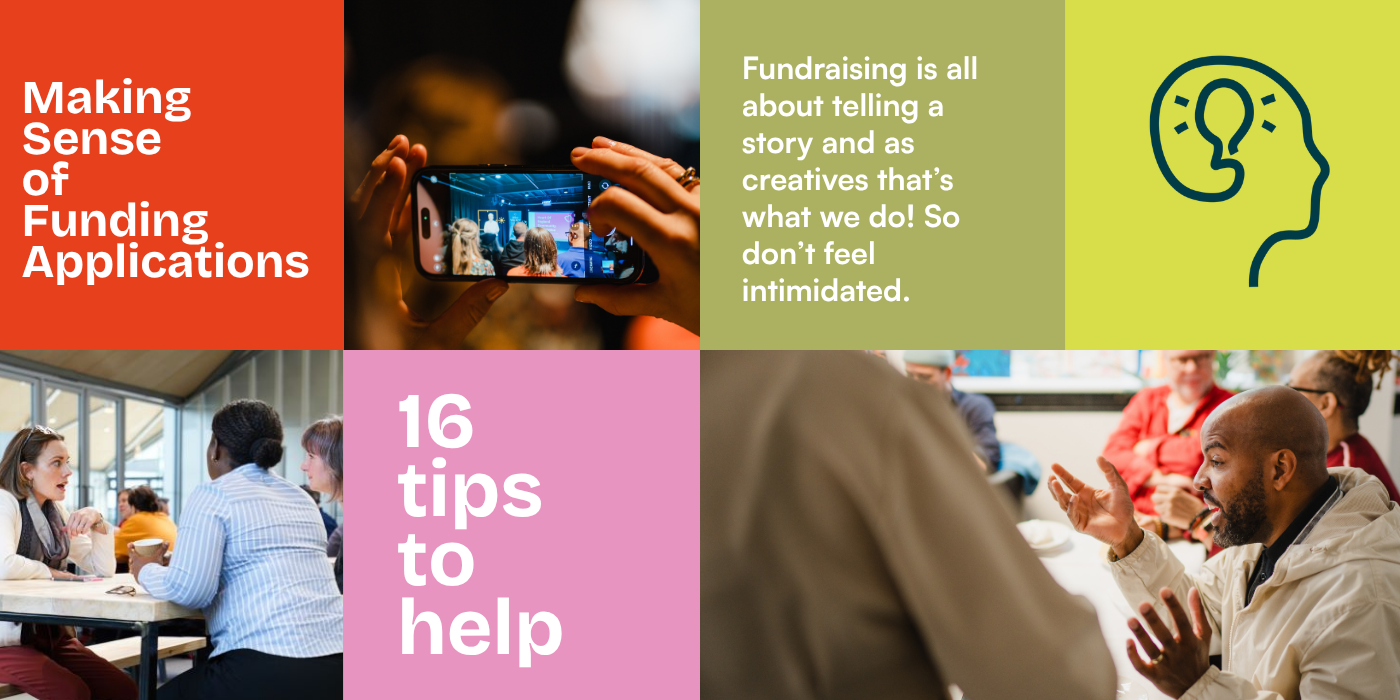
Funding applications can feel daunting, particularly when you are trying to turn a creative idea into the language of outcomes, budgets, evidence and activity plans. But one of the key messages from our latest funding advice session was reassuringly simple: fundraising is all about telling a story and as creatives that’s what we do, so don’t feel intimidated.
Led by our Fundraising Manager Yvonne, the session explored practical ways to approach funding applications, from working out why your project matters to building a budget, finding useful evidence and making sure everything in your application connects.
Here are some of Yvonne’s tips for making sense of the process.
1. Start with the story
Fundraising is all about telling a story and as creatives that’s what we do, so don’t feel intimidated. Use clear language – no need for poetic/jargon words etc. but do include your voice and passion.
2. Work out what the need is
Funding is often responding to a need. Ask yourself: What is the need? Being clear about the problem, opportunity or gap your project is responding to will help you make a stronger case for why it should happen.
3. Ask yourself why
What is your why? Why do you do this work?
If you have time have a look at Simon Sinek’s TED talk (about 16 years ago but still relevant).
4. Keep asking: Who cares?
Who cares? Keep asking this as you write. What if you don’t do it?
Thinking about this can help you explain why the project matters, who it matters to and what might be lost if it doesn’t happen.
5. Understand the difference between outcomes and outputs
Funders are usually interested in the difference your project will make. The outcomes.
Outcomes = Differences.
Outputs are what you are going to do e.g. deliver workshops to develop a new digital interactive film about the Black Country. Put simply, the output is the activity. The outcome is the difference that activity makes.
6. You don’t have to start at the beginning
Filling out an application? You don’t have to start at the beginning of the form! This may sound strange.
I find a question that I know I can answer easily and start there. Getting something down on the page can make the rest of the application feel much more manageable.
7. Start with the budget
I always start with the budget. It helps me scope out the size, scale and cost of the project. It will change as the application progresses. The budget just tells the story of your project in numbers. Thinking about costs early can also help you work out whether the scale of the project you are proposing is realistic.
8. Work offline
To get going I collect all the application questions and put them into a word doc. Don’t input directly into an online form or portal - work offline and copy and paste in to make sure you don’t lose your work.
It also makes it easier to move between questions, edit your answers and ask someone else to read through them.
9. Leave the project summary until last
Sometimes you are asked to give a summary of your project right at the beginning of the form. I always leave this until last. I will be able to articulate it better after I’ve completed the rest of the questions.
By the time you have written the whole application, you should have a much clearer idea of the strongest and most important elements to include.
10. Be specific
Include as much detail as possible e.g. we will deliver 6 digital workshops with up to 12 young people every week at our studios.
Specific information helps a funder understand exactly what you are proposing rather than having to fill in the gaps themselves.
11. Use evidence to support your case
Include relevant statistics and data to support your case for funding. Look out local population information around employment, educational attainment, disability etc.
Evidence can be particularly useful when you are explaining why a project needs to happen in a particular place or with a particular community.
12. Be realistic about what success looks like
Mention how you will measure success (evaluation). Be realistic, if success is that a young person in recovery turns up for 1 out of 5 sessions due to their circumstances then say that - don’t big up the numbers!
Under promise and over-deliver.
Success does not always need to mean reaching the biggest possible number of people. Think about what meaningful change could realistically look like for the people involved.
13. Make sure everything aligns
Make sure your application narrative, activity plan and budget ALL align. If you include something in the narrative, make sure it’s costed in the budget and included in the activity plan.
If you mention costs for a partner in the budget, make sure they are mentioned in the narrative and activity plan.
I always do a cross-reference exercise before submitting.
14. Ask someone else to read it
Involve others if you can. Ask someone else to look over everything to see if it makes sense.
Someone who has not been immersed in developing the project may notice gaps, assumptions or confusing sections that you have stopped seeing.
Useful data for strengthening your funding application
15. Look at the Indices of Deprivation 2025 Update
Updated deprivation data is gold for bids: it helps you evidence need, justify priority groups, target geography, and benchmark community challenges.
If you write place-based bids, grab the data, screenshot key maps/deciles, and use them to strengthen your ‘why here, why now’ story.
You can use this resource to find out about the area you are based in, or will be working in. Follow this link for more info.
16. Find your local JSNA where you can get more data about your area
A Joint Strategic Needs Assessment (JSNA) is a shared process used by local councils, the NHS, and community groups to study the current and future health, care, and wellbeing needs of a local population.
It helps local leaders plan, fund, and improve public services based on clear evidence.
You can google the JSNA for your borough e.g. Sandwell.
What do we mean by an outcome?
Outcome = Difference
(disclaimer – these came from a google search using AI)
A strong outcome from a creative project should describe the result, impact, and value created. Here's an example:
Outcome Example
"The outcome will be a short animated film to effectively communicate environmental awareness to young audiences. The film will showcase at local community events, receive positive feedback from viewers, and help to increase participation in sustainability initiatives."
A good creative project outcome typically answers:
What was created?
What problem did it solve or message did it communicate?
What impact did it have?
How was success measured?
Outcome from a Visual Arts Project
"The completed mural will transform a previously plain community space into a vibrant and engaging environment to reflected local culture and identity. The artwork will increase community pride, encourage public interaction with the space, and receive positive feedback from residents and visitors. The project will also help the artist develop advanced skills in composition, colour theory, and large-scale painting techniques."
This example highlights:
The final artwork (the mural)
Its impact (improved community engagement and pride)
The benefits (positive feedback and skill development)
Outcome from a Digital Arts Project
"The project will result in an interactive website that showcases local artists through digital galleries, video content, and virtual exhibitions. The finished platform will attract over 1,000 visitors in its first month, increased visibility for participating artists, and provide users with an engaging and accessible way to experience art online. The project will also strengthen skills in digital design, user experience (UX), and multimedia content creation."
This outcome demonstrates:
What was created: An interactive website
Creative achievement: Digital galleries and virtual exhibitions
Impact: Increased artist visibility and audience engagement
Skills developed: Digital design, UX, and multimedia production
Join Creative Black Country’s Funding Network
If you’d like to join Creative Black Country’s Funding Network, please email yvonne@creativeblackcountry.co.uk to be added.
Whether you are tackling your first funding application or trying to make your next one stronger, remember that it is ultimately another way of telling the story of your project: why it matters, who it is for, what you are going to do and what difference it could make.