
Visitors to The Ruskin Glass Centre in Amblecote often walk straight past my glass-fronted art studio, sandwiched between The Glasshouse College reception and the finance office. Making a beeline for the cafe or one of the craft outlets in the main centre, they don’t realise that behind the bamboo slatted blinds lies one of Dudley’s hidden gems. This isn’t a surprise, as the studio often looks dark and closed up. But a closer look at a small sign in the window would give passers-by a clue to what lies within.
The hidden gem I am describing is The Limpetarium, a contemporary cabinet of curiosities or wonder-room dedicated entirely to limpets, those overlooked and under appreciated sea-snails we often encounter gripping tightly to the rocks at the coast. Limpets may seem like a strange subject matter for landlocked Dudley, but we have a strong connection with the sea; from the shallow tropical ocean that once covered this land millions of years ago to our much-loved trips to familiar seaside places, limpets are not as out of place as we might at first think.
I became fascinated by limpets following a holiday to Orkney, an archipelago off the far north coast of Scotland, in 2018. Whilst there, I went to an open day at Skaill Farm, an archaeological dig on one of the northern islands called Rousay, sometimes known as the ‘Egypt of the North’ due to its abundance of historically important sites. The archaeologists working there told me about the farm and how they had been unearthing limpet shells thought to be many hundreds of years old.
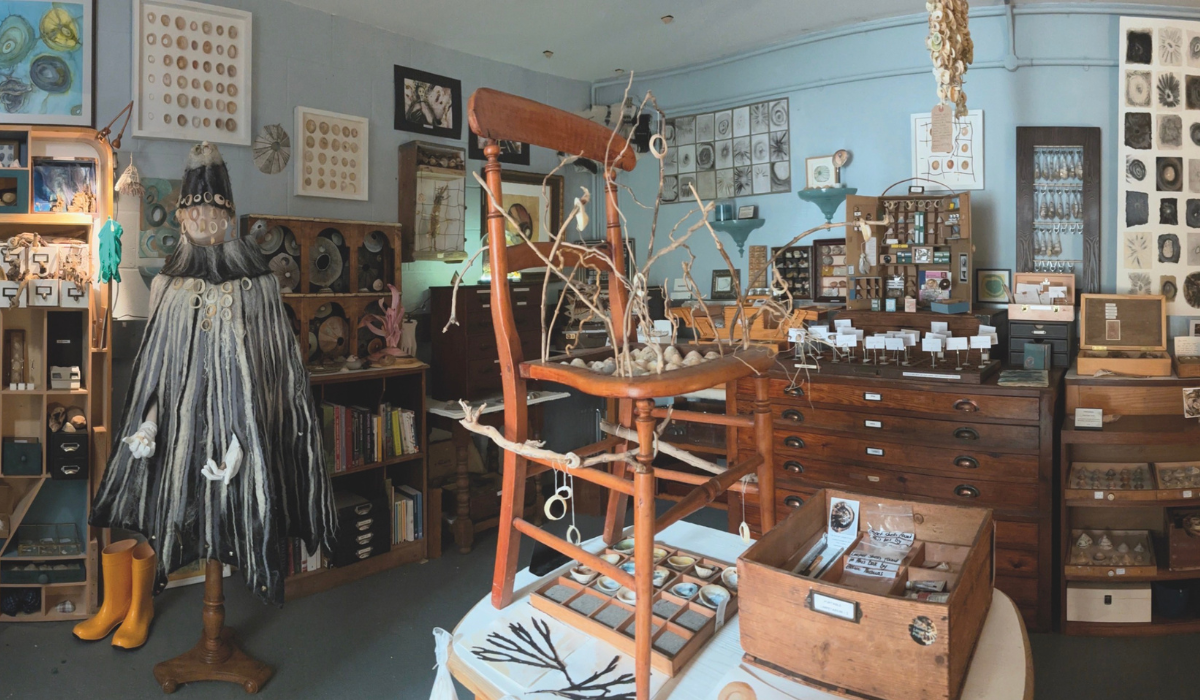
Limpets were once used by Skaill’s Viking farmers as fishing bait, and the shells, which were then thrown away, formed a midden within the layers of soil that covered the farm remains. I was given a handful of these ancient shells as a souvenir, and it was this treasure that set me off on my limpet inquiry. As an artist, I spend much of my time noticing things that others overlook, paying careful attention to everyday stuff and being curious. So, the little box of shells that I brought home from Orkney got me wondering whether other people at other times in history had connections with limpets too. Whilst I tried to find out, I started making drawings of the shells, hundreds of them! Drawing helps me focus, to zoom in on the details, and in the process, better understand the shapes, colours and textures of the limpet form. I made all sorts of conical sculptures too, from paper, cardboard, clay, pewter and felted wool, some big enough to get inside. I wanted to see what it might be like to be a limpet. I gathered other limpet shells around me, some found on beaches closer to home, others gifted by serious limpet shell collectors who had heard about my project.My search for human-limpet connections over time began to pay off, and hundreds of incredible stories and objects came to light. These ranged from mythological tales of bottomless pools being emptied with leaky limpet shells in Bodmin Moor to limpet teeth being used to improve human dentistry in cutting-edge science.
I’ve been on many limpeteering trips to museums, universities, archaeological sites and beaches in my limpet quest, and amazing people have engaged with the project, some experts in their field, others curious observers who wanted to share a snippet of knowledge or an interesting shell. I have discovered that Limpets form a vital part of coastal ecosystems, acting as keystone species. They keep beaches clear of seaweed by rasping it off the rocks with their iron-based teeth, enabling other creatures to move in and thrive. But they are under threat from human-made pollution, deep-sea mining, over-harvesting and climate change. They really need our support.
Through my art-based research, I have found out that limpets are far more important than I ever realised. So, to share this wealth of knowledge gathered over several years, I now open The Limpetarium to the public from time to time. The project is self-funded, so it is dependent on me working much of the time as a social artist locally to keep The Limpetarium going, but please do get in touch if you would like to come and have a look or keep an eye on my website and social media for open events throughout the year.
Written by Helen Garbett
Find out more by visiting thelimpetarium.com / to visit email: limpetwoman@gmail.com