
Spotlight on Tape & Texture: Claire Buckerfield Reimagines the Everyday
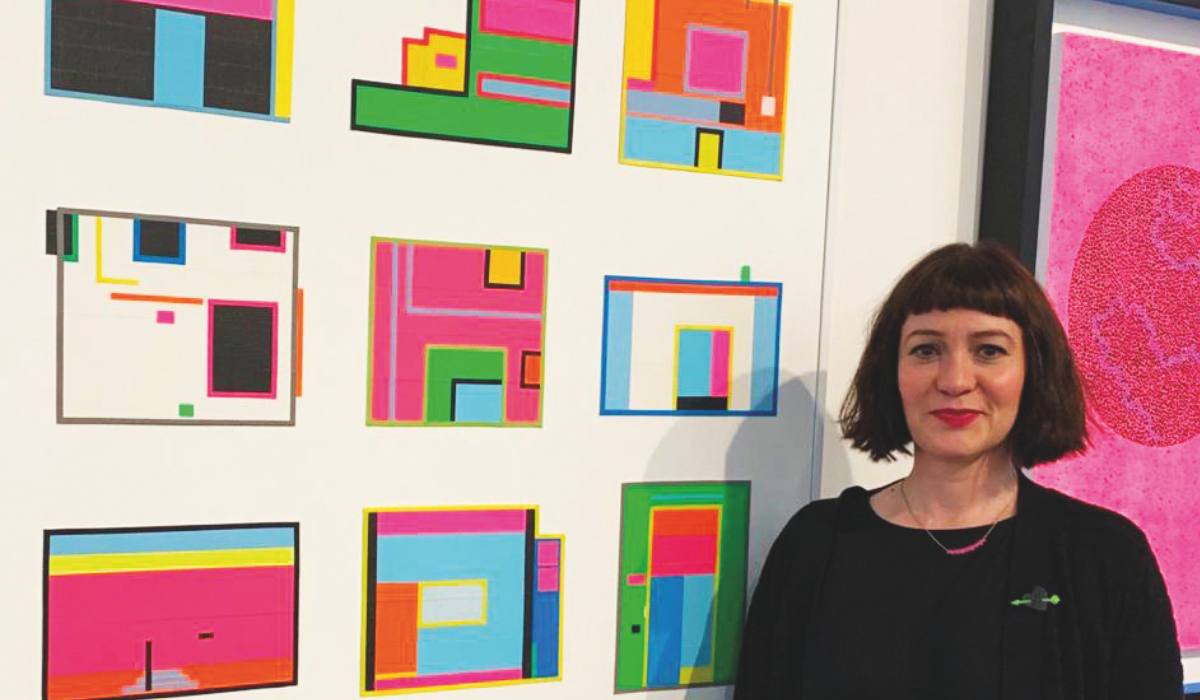
From childhood sketches of fungi to bold industrial tape artworks that celebrate overlooked architecture, Claire Buckerfield’s creative journey is one of reinvention, resilience and pride in place. Based in Wolverhampton, Claire’s distinctive work transforms shops, factories, and forgotten corners into vibrant compositions, inviting us to see the Black Country through fresh eyes. In this conversation, Claire reflects on their late start in art education, the power of local spaces, and the joy of making the ordinary feel extraordinary.
Can you tell us about your artistic journey? What first drew you to your art form?
I drew a lot as a child and was obsessed with drawing mushrooms and fungi of all things. I loved how unusual they were, and their colours were fascinating. I can track my love of colour and shape back to this early period. Art education was basic at my school; it largely consisted of copying a like-for- like image (my mushrooms came in useful). I realise now that it made me appreciate line and colour. This stayed with me, and I enrolled in art college in my late 30s.
The approach to art within Higher Education was very different to school and it set things in motion for me. It snowballed from there, and I went on to complete a BA and MA in Fine Art at the University of Wolverhampton. Studying Fine Art gave me the space to explore methods in making andthinking. Having knowledge and guidance on tap from lecturers who were practising artists was invaluable in shaping me as an artist.
During this period, I became interested in the spaces we occupy. I did a lot of drawing in situ, reconfiguring uninteresting spaces such as corridors and corners into celebrations of the insignificant and banal. This idea still runs through my work today.
Wolverhampton and the Black Country have a rich cultural and industrial history. How has living and working in the city influenced your art?
Living and working in the Black Country is fundamental to my artwork, but not limited to it. For a long time, I didn’t realise that my work was as much about how I felt about where I’m from as it was about other people’s perception of it.
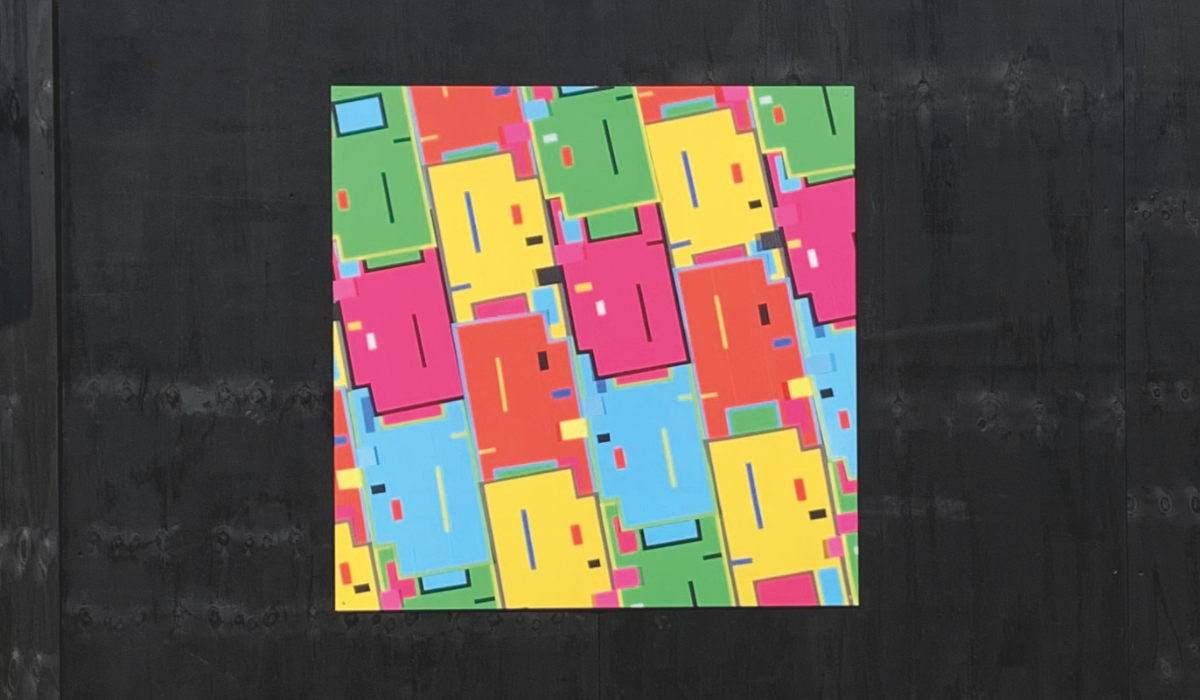
This has shaped what my practice has become, but I can apply the same framework and approach to other locations.I take inspiration from local architecture and the places people inhabit. The ultimate goal for me is to encourage people to look anew at their everyday surroundings.
My current work is a response to overlooked subject matter, such as shops, factories, essentially places that are often ignored and unloved. I work with bright colours to celebrate these once busy and vibrant places.
What draws you to the mediums of industrial tape and ribbons to make your work?
Over the years, I've tried lots of unusual materials to draw with. Partly to try new ways of drawing and partly to see what happens when that material is no longer being used for its intended purpose. Often, drawing is seen as something you do with a pen or pencil, a preparatory exercise leading to the main artwork. I like to challenge those traditional expectations. I currently draw with industrial tape, and I find it interesting to imagine it could have been produced or sold inside some of the buildings that inspire the work.
How do you engage with the local art scene in the Black Country? Are there specific places or events that inspire you?
You get to know the artists in your area by going to galleries and workshops. It seems obvious, but you’ll find an art community easily this way. Wolverhampton Art Gallery and Wolverhampton Art Centre [formerly Newhampton Art Centre] both have a good programme of events and exhibitions, and I go to both often.
There is a brilliant new gallery and community space in Wolverhampton City Centre called 01902, run by the artist Bag Lord. It’s already hosted exhibitions showcasing regional artists’ work and countless art workshops run by talented artists. There’s a real buzz about the place, and I think it’s doing great things for the city. I hope it stays around for a long time. Go check it out!
Your pieces often feature layering of materials and textures. Could you walk us through your creative process and how you approach building a new work?
I initially explore a location on foot, getting a sense of the area whilst spotting interesting architectural shapes. I’m at a stage now where I know instantly if a section of a building or window will translate well into a drawing. I’ll take lots of images, go back to the studio and make rough sketches with tape. From there, it becomes a process of layering colour and texture, adding and taking away until I’m happy with the final work.
What advice would you give to aspiring visual artists coming out of college or university and looking to make their way in the creative world?
As soon as you leave university, set up a studio space. It's the single most important thing you can do as an artist when you leave higher education. Keeping up the momentum of making work is critical; having that space to think and make work is essential. Apply for residencies and exhibitions, even if you aren’t successful at first. Be persistent; if your work is good enough, it will happen.